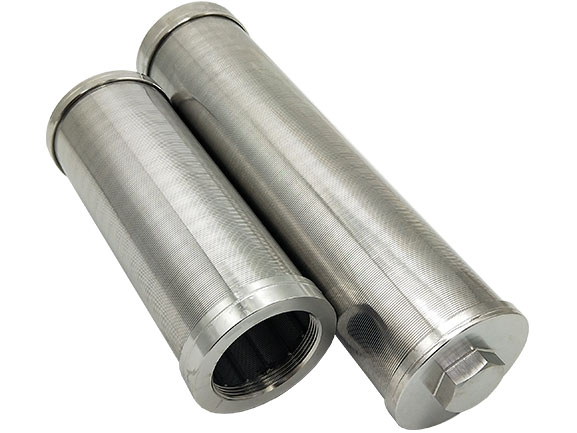
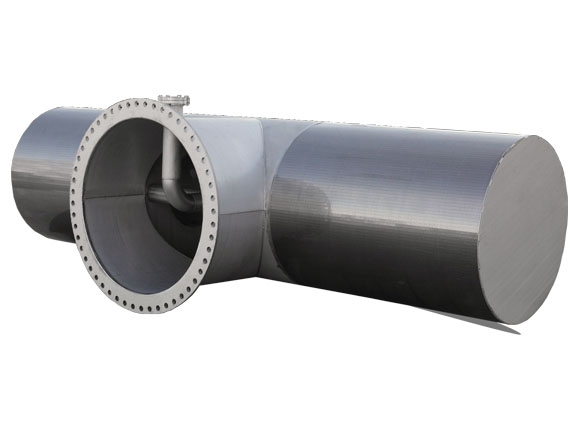
Both Y-Strainers and Angle filters are crucial "first lines of defense" in data center emerging immersion cooling systems. Although simple in structure, they are vital for protecting expensive core equipment.
Below, I will detail their application in data center cooling systems, including working principles, location, differences, and selection considerations.
I. Core Overview: Role and Importance
Their core function is to filter solid particles from the cooling medium (water, water-glycol, coolant, etc.) to prevent contaminants from damaging or clogging downstream critical equipment.
1. Role Positioning: Coarse or Pre-filters.
2. Protection Targets:
· Precision Equipment: Such as plate heat exchangers, electronic water pumps, control valves (especially proportional integral valves), spray nozzles, etc.
· System Efficiency: Maintain clear heat exchanger channels for high heat transfer efficiency; ensure normal operation of pump impellers and avoid abnormal wear.
II. Y-Strainer
1. Structure & Working Principle
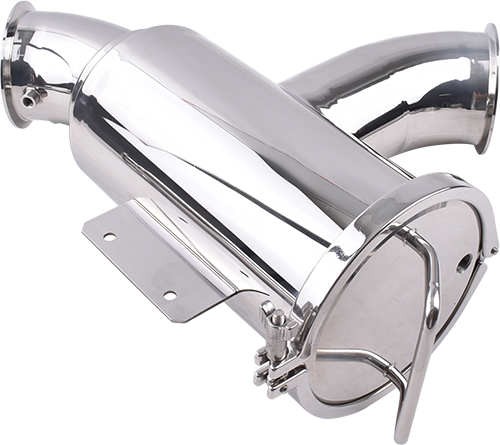
· Structure: Named because the strainer screen and valve body form a "Y" shape. Fluid enters from one end, passes through the basket-shaped screen at the bottom, impurities are trapped inside the strainer basket, and clean fluid flows out the other end.
· Working Principle: Based on mechanical sieving, using a removable metal screen (usually stainless steel mesh) to intercept particles.
2. Application Scenarios in Data Center Cooling Systems
The Y-Strainer is the most common and versatile type in data center water-side cooling systems.
· Location 1: Chilled Water System
· Chiller Inlet: Protects the evaporator and condenser from blockage by welding slag, rust, and other impurities in the pipes.
· Pump Inlet: Protects the pump impeller and mechanical seal - one of the most common causes of pump failure.
· Plate Heat Exchanger Primary/Secondary Side Inlet: Protects its narrow and complex flow channels from clogging.
· Air Handling Unit (AHU) / Fan Coil Unit (FCU) Inlet: Protects the coils and control valves.
· Location 2: Condenser Water System (Cooling Towers)
· Cooling Tower Return Pipe: Intercepts algae, sediment, insects, leaf debris, etc., entering the system from the cooling tower.
· Location 3: Immersion Cooling Systems
· Main Circulation Pump Inlet or Filtration System Branch Inlet: Serves as a pre-filter to intercept larger particles (e.g., plastic debris, seal material fragments), protecting downstream more precise filtration equipment (e.g., bag filters, fine filter cartridges) and ion exchange resins, thereby extending their service life.
3. Characteristics
· Advantages:
· Simple structure, low cost.
· Relatively low pressure drop, minimal impact on system flow.
· Flexible installation direction, suitable for horizontal or vertical pipes (note screen orientation).
· Disadvantages:
· Cleaning the screen usually requires system shutdown and disassembly of the bottom plug or blind flange.
III. Angle filter
1. Structure & Working Principle
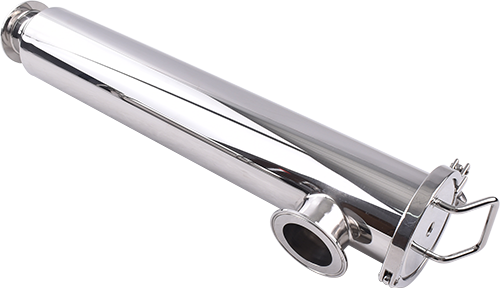
· Structure: The valve body forms a 90-degree right angle. Fluid enters from the side inlet, passes through the screen, and exits from the vertical outlet.
· Working Principle: Same as the Y-strainer, mechanical sieving.
2. Application Scenarios in Data Center Cooling Systems
Angle filters are functionally similar to Y-strainers, but their unique structure makes them suitable for specific scenarios.
· Scenario 1: Pipe Corners with Space Constraints
· When piping requires a 90-degree turn, using a Angle filter can achieve both direction change and filtration, saving pipe space and installation costs. This is very useful in space-constrained data center rooms or rooftop cooling tower platforms.
· Scenario 2: Applications Requiring Quick Maintenance or Automatic Blowdown (High-end Applications)
· Some Angle filters are designed with automatic blowdown valves. Because impurities settle in the "pocket" at the bottom of the screen due to gravity, they can be easily discharged periodically via a solenoid valve or manual ball valve without requiring a shutdown. This is very attractive for data centers requiring 24x7 continuous operation.
· Scenario 3: Immersion Cooling Systems
· Application locations are similar to Y-strainers. If the system layout is at a corner, or if the operations team particularly values the ability for quick blowdown without shutdown, a Angle filter with blowdown functionality might be preferred.
3. Characteristics
· Advantages:
· Saves space, especially suitable for pipe corners.
· Better dirt holding capacity; particles settle more easily in the bottom "pocket".
· Easier to implement blowdown without shutdown (if equipped with a blowdown valve).
· Disadvantages:
· Typically has a slightly higher pressure drop than a comparable Y-strainer.
· Cost may be slightly higher.
In data center cooling systems, the Y-Strainer is the standard, versatile first choice, found at the inlets of key equipment throughout chilled and condenser water systems.
The Angle filter is an important complementary and optimized choice. It is an ideal solution when your pipeline layout is at a corner, or when you have extremely high requirements for maintenance without shutdown. Especially in immersion cooling systems, where liquid cleanliness requirements are extremely high and operational continuity is paramount, the advantages of Angle filters with blowdown functionality are even more pronounced.
The final choice should be based on a comprehensive consideration of the specific system design, spatial layout, maintenance strategy, and budget.
Data Center Liquid Cooling Equipment introduction and application
View More >"First Lines of Defense" in data center cooling systems
View More >Types of Filters Required in a Clean-in-Place (CIP) System: Locations and Primary Functions
View More >Data Center Immersion Cooling: Types of Coolants
View More >


Copyright © Hebei Huanzheng Filter Equipment Co., Ltd. All Rights Reserved
Powered by